
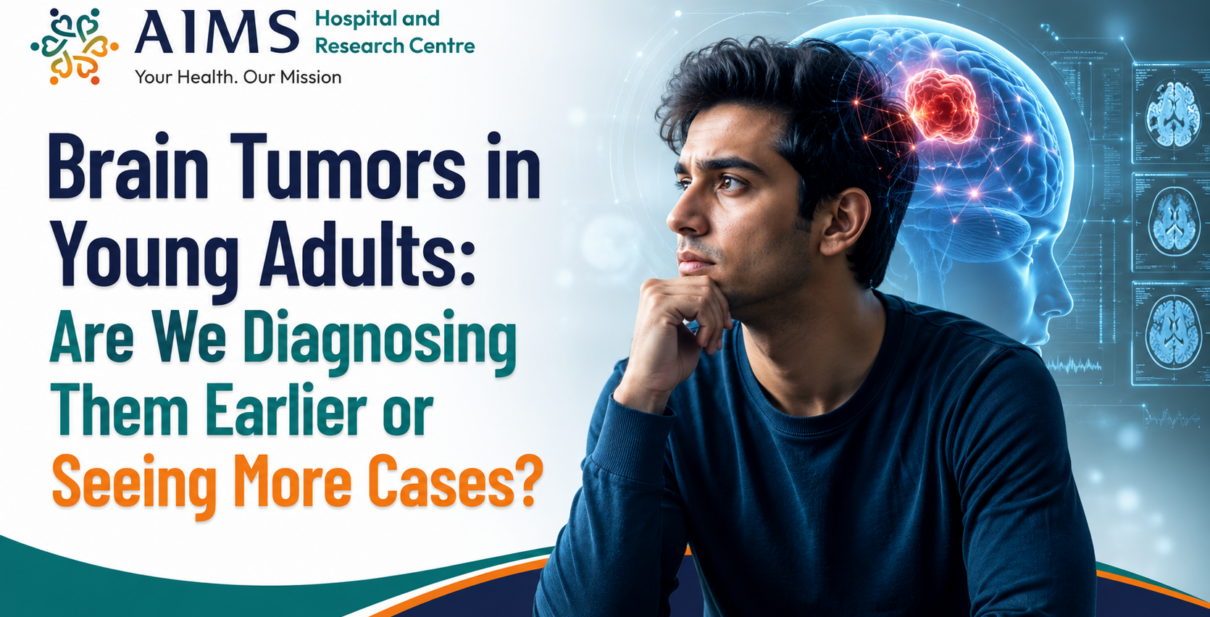
As a neurosurgeon, one of the questions I am increasingly asked by patients and their families is whether brain tumors are becoming more common. It is a reasonable question. Over the last few years, there seems to be growing awareness about neurological disorders, and many people know someone who has undergone brain surgery or received treatment for a brain tumor. This naturally creates concern and sometimes even fear.
At AIMS Hospital in Aundh Pune, I have noticed that more young adults are seeking medical attention for symptoms that might previously have been ignored. Persistent headaches, unexplained seizures, changes in vision, difficulty with balance, or subtle changes in personality are no longer being dismissed as easily as they once were. In many ways, this increased awareness is a positive development because it allows us to identify serious conditions at an earlier stage.
One of the biggest misconceptions about brain tumors is that they always cause dramatic symptoms. People often imagine a sudden collapse, severe neurological deficits, or unbearable headaches. The reality is often very different. Some brain tumors develop slowly and may initially produce symptoms so mild that they are mistaken for stress, fatigue, migraine, or lack of sleep. A young professional working long hours may attribute recurring headaches to work pressure. A student struggling with concentration may assume it is simply academic stress. These explanations may be true in most cases, but occasionally there is an underlying neurological problem that deserves further evaluation.
The widespread availability of advanced imaging has changed the landscape of neurosurgery significantly. At AIMS Hospital in Aundh Pune in Aundh Pune, MRI and CT scans allow us to diagnose conditions that might have gone undetected years ago. This is one reason why it may seem as though brain tumors are becoming more common. We are simply much better at finding them. Conditions that previously remained hidden until they caused severe symptoms can now be detected much earlier.
That said, the diagnosis of a brain tumor remains one of the most emotionally challenging moments a patient and family can experience. The word “tumor” immediately triggers fear, and many people assume the worst. One of the first conversations I have with patients is to explain that not all brain tumors are cancerous. Some are benign and grow very slowly, while others may require more aggressive treatment. Every tumor is different, which is why individualized assessment is so important.
What often surprises patients is how much neurosurgery has evolved over the years. Many people still imagine brain surgery as an extremely risky procedure with prolonged recovery and uncertain outcomes. While neurosurgery remains one of the most complex fields of medicine, advances in technology have dramatically improved precision and safety. High-resolution imaging, neuronavigation systems, advanced microscopes, and minimally invasive techniques allow us to plan and perform surgeries with a level of accuracy that was unimaginable a generation ago.
At AIMS Hospital in Aundh Pune, we frequently remind patients that early diagnosis often makes treatment more effective. Unfortunately, some individuals delay seeking medical advice because they fear what the diagnosis might reveal. This hesitation is understandable, but it can sometimes allow a treatable condition to progress further than necessary. Persistent neurological symptoms should never be ignored, particularly when they are new, worsening, or affecting daily life.
Another important trend I have observed is the growing role of multidisciplinary care. Treating a brain tumor is rarely the responsibility of a single doctor. Neurosurgeons work closely with neurologists, radiologists, oncologists, rehabilitation specialists, and other healthcare professionals to create comprehensive treatment plans. Modern neurological care is increasingly collaborative, ensuring that patients receive the best possible support throughout their journey.
I also believe that public awareness has improved significantly. Patients today are more informed and more willing to ask questions about their health. While the internet can sometimes create unnecessary anxiety, it has also encouraged people to seek medical attention sooner when symptoms persist. This shift has undoubtedly contributed to earlier diagnosis and better outcomes for many neurological conditions.
As a neurosurgeon, I have learned that every brain tumor case is unique. Some patients require surgery, while others may benefit from observation, medication, radiation therapy, or a combination of treatments.