


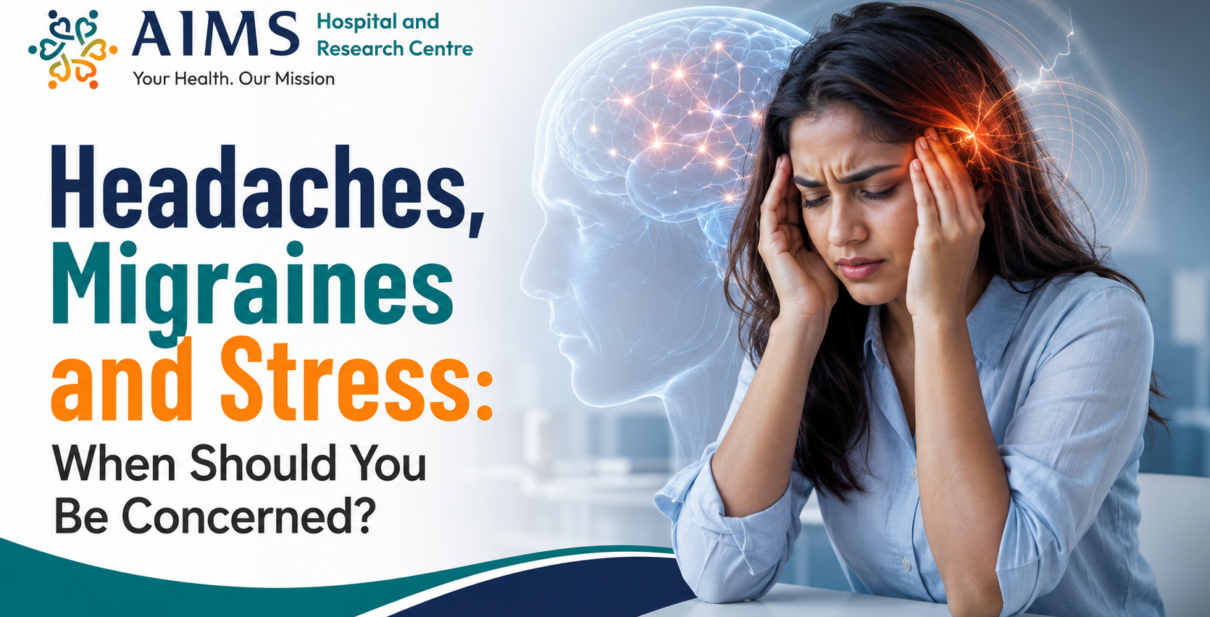
As a Neuro Physician, one of the most common reasons patients visit my clinic is headache. Almost everyone experiences a headache at some point in life, which is why many people tend to ignore them. A tablet, a cup of coffee, a few hours of sleep, and life goes on. However, what I have noticed over the years is that headaches are becoming increasingly common, particularly among young adults, working professionals, and even students.
At our AIMS Hospital in Aundh Pune, it is not unusual to meet patients who have been living with recurring headaches for months or even years before seeking medical advice. Most assume that stress, long working hours, excessive screen time, or lack of sleep are solely responsible. While these factors certainly play a role, persistent headaches should never be dismissed without understanding the underlying cause.
Modern life has created the perfect environment for headaches to thrive. Many people spend hours staring at computer screens, skipping meals, sleeping irregularly, and dealing with constant mental pressure. The brain is remarkably resilient, but it is not immune to the effects of chronic stress and unhealthy routines. As a result, headaches have become one of the most common neurological complaints we see at our AIMS Hospital in Aundh Pune.
One important distinction that many patients struggle to understand is the difference between a routine headache and a migraine. A migraine is not simply a severe headache. It is a neurological condition that can significantly affect quality of life. Patients often describe throbbing pain, sensitivity to light and sound, nausea, and difficulty concentrating. Some individuals even experience visual disturbances before the headache begins. Unfortunately, many people spend years treating migraines as ordinary headaches, delaying proper diagnosis and management.
Stress remains one of the most significant triggers. I often notice that patients develop more frequent headaches during periods of increased professional pressure, academic examinations, family responsibilities, or emotional challenges. The connection between the brain and emotional well-being is powerful. While stress may not directly cause every headache, it can certainly increase their frequency and severity.
Another factor contributing to the rise in headaches is poor sleep. At AIMS Hospital in Aundh Pune, many patients report sleeping far fewer hours than recommended. Some stay awake late scrolling through their phones, while others struggle with irregular work schedules. Sleep deprivation affects the brain in numerous ways and can trigger headaches, worsen migraines, and reduce the body’s ability to cope with stress.
What concerns me most is that people often normalize symptoms that deserve attention. Patients become accustomed to recurring headaches and start carrying painkillers wherever they go. They adjust their routines around the pain rather than investigating why it keeps occurring. While most headaches are not caused by serious neurological conditions, assuming that every headache is harmless can be risky.
There are certain situations where medical evaluation becomes particularly important. A sudden severe headache unlike anything experienced before, headaches associated with weakness, speech difficulties, vision changes, seizures, confusion, or persistent vomiting should never be ignored. These symptoms may indicate underlying neurological conditions that require immediate attention.
At AIMS Hospital in Aundh Pune, advanced diagnostic tools allow us to evaluate patients thoroughly when necessary. Brain imaging, neurological examinations, and detailed medical histories help us distinguish between common headache disorders and more serious neurological conditions. Fortunately, the majority of headaches are manageable once the correct diagnosis is established.
One of the most encouraging developments in neurology is the growing understanding of migraine treatment. Many patients believe they simply have to live with migraines for the rest of their lives. In reality, effective treatments and preventive strategies are available. Identifying triggers, improving sleep habits, managing stress, maintaining hydration, and using appropriate medications can significantly reduce the frequency and severity of migraine attacks.
I also believe that awareness has improved considerably. More patients today recognize that neurological symptoms deserve professional evaluation. They are asking questions, seeking expert guidance, and taking a proactive approach to their health. This shift is helping many individuals find relief sooner and avoid unnecessary suffering.
As a Neuro Physician, I often remind patients that headaches are not the enemy—they are messages. The brain uses symptoms to signal that something may be out of balance. Sometimes the cause is simple, such as stress or dehydration. Other times, further investigation may be needed. The important thing is not to ignore the message.
At AIMS Hospital in Aundh Pune, we encourage patients to pay attention to recurring neurological symptoms rather than simply masking them with temporary solutions. Headaches may be common, but they should never be considered normal when they begin interfering with daily life.
The next time you find yourself reaching for another painkiller, ask yourself an important question: are you treating the headache, or are you understanding why it keeps returning? In many cases, finding the answer can be the first step toward lasting relief and better neurological health.