
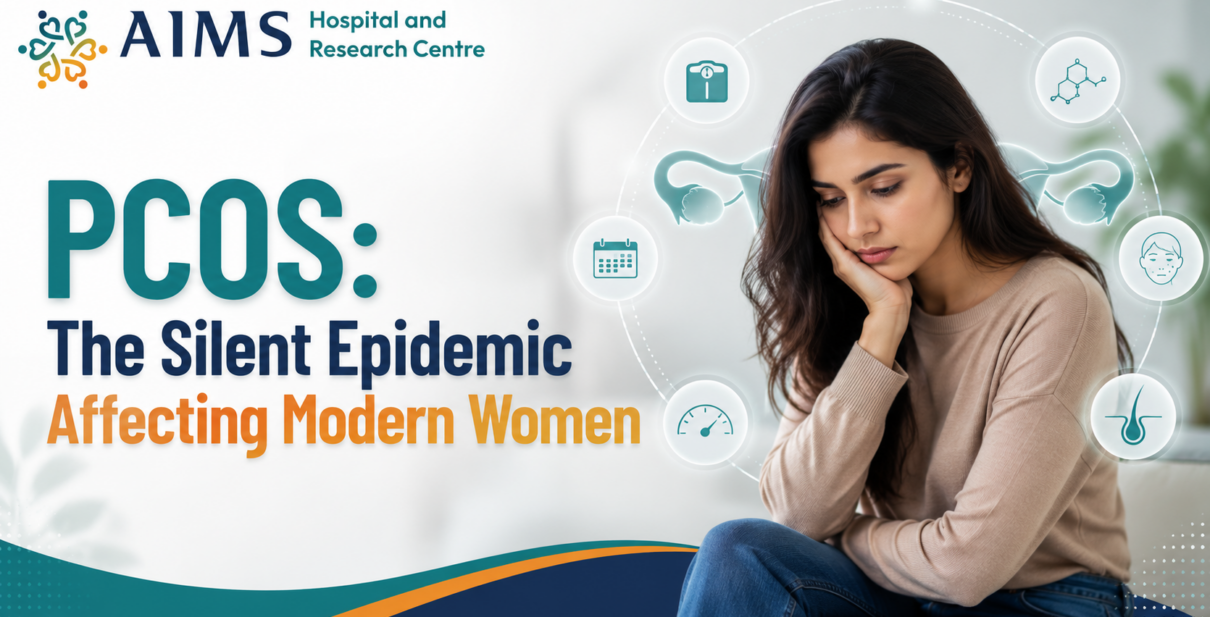
As a gynecologist, one condition seems to appear in my consultation room almost every day—Polycystic Ovary Syndrome, commonly known as PCOS. A decade ago, many women had never even heard of it. Today, it has become one of the most common health concerns among young women, particularly those in their teens, twenties, and thirties.
At our AIMS Hospital in Aundh Pune, it is not unusual to meet women who initially visit for irregular periods, acne, unexplained weight gain, or difficulty conceiving, only to discover that PCOS is the underlying cause. What makes this condition particularly challenging is that it often develops gradually, with symptoms that many women dismiss as normal or temporary.
One of the reasons PCOS has become such a major health issue is that modern lifestyles have changed dramatically. Many women are balancing demanding careers, academic responsibilities, family commitments, and social expectations, often with very little time left for themselves. Irregular meal timings, lack of physical activity, inadequate sleep, and chronic stress have become increasingly common. While these factors do not directly cause PCOS in every case, they can certainly worsen hormonal imbalances and contribute to its progression.
The first sign of PCOS is often a change in menstrual cycles. Some women experience delayed periods, while others may skip periods altogether for months. Because these irregularities are sometimes viewed as minor inconveniences rather than medical concerns, many women postpone seeking professional advice. At our hospital in Aundh Pune, we frequently see patients who have lived with irregular cycles for years before deciding to investigate the cause.
Another aspect of PCOS that deserves attention is its impact on self-confidence. Acne, unwanted facial hair, thinning scalp hair, and weight gain can be emotionally distressing, particularly for young women. While these symptoms may appear cosmetic on the surface, they often affect mental well-being and self-esteem in significant ways. Many patients tell me that they feel frustrated because they are making efforts to maintain a healthy lifestyle but are still struggling with symptoms that seem beyond their control.
One misconception I encounter regularly is the belief that PCOS is only a fertility problem. While PCOS can certainly affect ovulation and make conception more challenging for some women, its impact extends far beyond reproductive health. Untreated PCOS can increase the risk of insulin resistance, type 2 diabetes, high cholesterol, fatty liver disease, and cardiovascular problems later in life. In many ways, PCOS is a whole-body condition rather than simply a gynecological disorder.
At AIMS Hospital in Aundh Pune, we often emphasize that early diagnosis can make a significant difference. The sooner hormonal imbalances are identified, the easier it becomes to manage symptoms and reduce long-term health risks. Unfortunately, many women assume that irregular periods are simply part of their body’s natural pattern and therefore delay evaluation.
Social media has also played an interesting role in the conversation around PCOS. On one hand, it has increased awareness and encouraged women to seek help earlier. On the other hand, it has created an overwhelming amount of information, much of which is inaccurate or misleading. Patients often arrive with advice gathered from influencers, online forums, and unverified sources. While some recommendations may be helpful, others create unrealistic expectations or unnecessary anxiety.
The encouraging news is that PCOS can be managed effectively. Treatment is not always about medication. In fact, lifestyle modifications often form the foundation of successful management. Regular physical activity, balanced nutrition, adequate sleep, stress reduction, and healthy weight management can have a remarkable impact on hormonal health. Even modest lifestyle improvements can lead to significant changes in symptoms and overall well-being.
What I find most rewarding as a gynecologist is seeing women regain confidence after understanding their condition. Many arrive feeling confused and discouraged. They believe their symptoms are something they simply have to live with. Once they receive proper guidance and a personalized treatment plan, they often discover that meaningful improvement is possible.
At AIMS Hospital in Aundh Pune, we encourage women not to ignore changes in their menstrual cycles or persistent symptoms that affect their quality of life. The body has a way of signaling when something is out of balance, and those signals deserve attention rather than dismissal.
As a gynecologist, I believe the growing prevalence of PCOS reflects many of the challenges of modern living. While we cannot eliminate every risk factor, we can improve awareness, encourage early diagnosis, and empower women to take charge of their health.
PCOS may be common, but it should never be considered normal. The earlier it is recognized and addressed, the better the outcomes—not only for reproductive health but for overall long-term wellness. Sometimes, the most important step is simply choosing not to ignore what your body has been trying to tell you all along.