

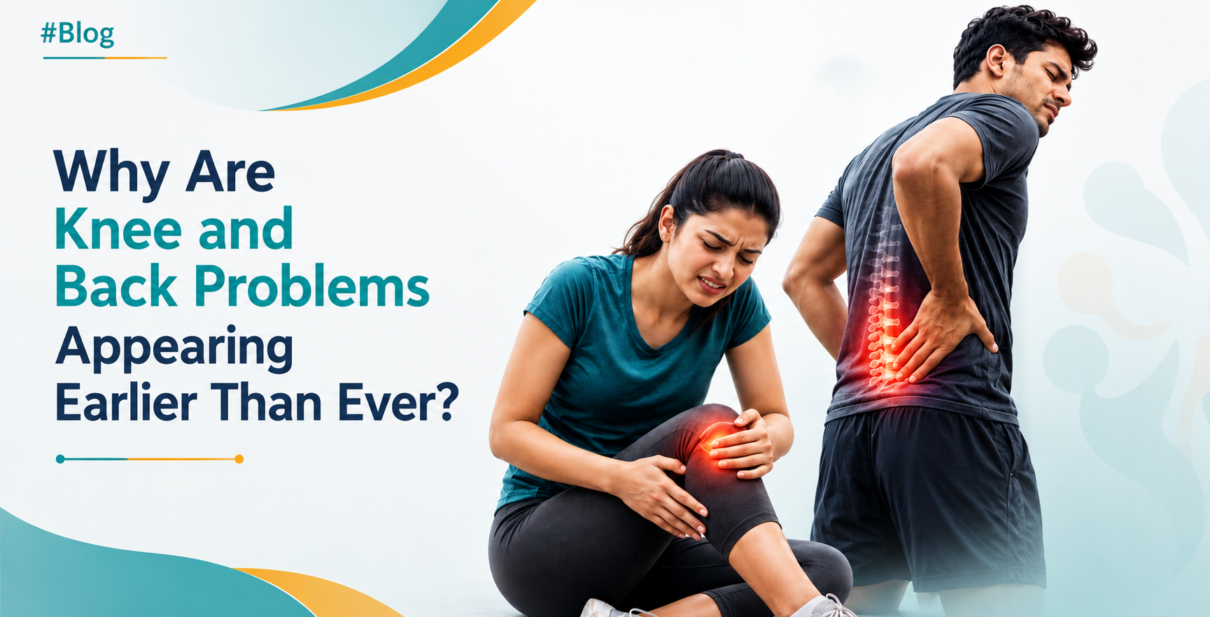
As an Orthopaedic Surgeon, one of the biggest changes I have noticed over the years is the age of the patients seeking treatment for joint and spine problems. There was a time when knee pain, back pain, and joint stiffness were concerns primarily associated with older adults. Today, however, it is increasingly common to see patients in their twenties, thirties, and forties struggling with conditions that were once considered age-related.
At our AIMS Hospital in Aundh Pune, young professionals, college students, homemakers, and even fitness enthusiasts frequently visit with complaints of persistent back pain, knee discomfort, neck stiffness, and reduced mobility. Many are surprised when they learn that these symptoms are not simply a result of a busy lifestyle but may indicate underlying musculoskeletal problems that require attention.
The obvious question is: why is this happening?
In my opinion, the answer lies in how dramatically our daily routines have changed. Human bodies are designed for movement. Yet modern life encourages the exact opposite. Many people spend eight to ten hours a day sitting at desks, working on computers, commuting in vehicles, and relaxing in front of screens. Physical activity that was once a natural part of everyday life has become optional.
One of the most common complaints we see at our AIMS Hospital in Aundh Pune is lower back pain. Patients often expect to hear that a slipped disc or major injury is responsible. Surprisingly, many cases are linked to prolonged sitting, poor posture, weak core muscles, and lack of regular movement. The spine thrives on activity, and when it is forced into the same position for hours at a time, discomfort becomes almost inevitable.
Another growing concern is knee pain among younger adults. Traditionally, knee arthritis was considered a disease of aging. While age remains an important factor, excess body weight, sedentary lifestyles, and sports-related injuries are contributing to knee problems much earlier in life. I frequently meet patients in their thirties who experience knee pain while climbing stairs, exercising, or even performing routine daily activities.
What is particularly interesting is that many people swing between two extremes. Some lead highly sedentary lifestyles, while others suddenly engage in intense workouts without proper preparation. At our AIMS Hospital in Aundh Pune, we often treat injuries resulting from weekend fitness enthusiasm. Individuals who spend most of the week sitting may attempt vigorous exercise sessions without conditioning their muscles and joints, increasing the risk of strains, ligament injuries, and joint problems.
Technology has also influenced posture in ways we rarely consider. The constant use of smartphones has contributed to what many healthcare professionals informally call “tech neck.” Looking down at screens for prolonged periods places significant strain on the neck and upper back. Over time, this can lead to chronic pain, muscle tension, and reduced mobility.
One misconception I frequently encounter is the belief that pain is a normal part of getting older or staying active. While occasional aches may occur, persistent pain should never be accepted as normal. Pain is often the body’s way of signaling that something requires attention. Ignoring these signals may allow minor issues to develop into more significant problems.
At our AIMS Hospital in Aundh Pune, we emphasize the importance of early intervention. Many Orthopaedic conditions respond exceptionally well to conservative treatments when identified early. Physical therapy, posture correction, weight management, activity modification, and strengthening exercises can often prevent the need for more invasive procedures later on.
Obesity remains another major contributor to Orthopaedic problems. Every extra kilogram of body weight increases stress on weight-bearing joints, particularly the knees and hips. Over time, this additional strain accelerates wear and tear, increasing the risk of degenerative joint disease. Maintaining a healthy weight is one of the simplest yet most effective ways to protect long-term musculoskeletal health.
The good news is that awareness about Orthopaedic health is gradually improving. More people are recognizing the importance of strength training, mobility exercises, ergonomic workstations, and preventive care. At our AIMS Hospital in Aundh Pune, we encourage patients to think about joint and spine health long before symptoms become severe.
Advances in Orthopaedic care have also transformed treatment options. Modern imaging techniques, minimally invasive procedures, joint preservation strategies, and improved rehabilitation programs allow many patients to recover more effectively than ever before. However, even the most advanced treatments cannot fully compensate for years of neglecting basic movement and physical health.
As an Orthopaedic Surgeon, I believe one of the most important lessons we can learn is that movement is medicine. The human body is designed to walk, stretch, bend, lift, and remain active. When we move less, the consequences often appear in our joints, muscles, and spine.
At our AIMS Hospital in Aundh Pune, we remind patients that Orthopaedic health is not simply about treating injuries or replacing joints. It is about preserving mobility, independence, and quality of life. The choices you make today—how much you move, how you sit, how you exercise, and how well you care for your body—will influence how comfortably you move for decades to come.
The rise in knee and back problems among younger adults is a warning sign that modern lifestyles are taking a toll on our musculoskeletal health. Fortunately, it is a warning we still have the power to act upon.