

When people hear the term “plastic surgery,” the first thing that often comes to mind is cosmetic procedures. Social media has played a significant role in shaping this perception, with discussions frequently centered around beauty enhancements and aesthetic transformations. However, as a plastic and reconstructive surgeon, I can confidently say that a large part of our work has very little to do with vanity and everything to do with helping people regain function, confidence, and quality of life.
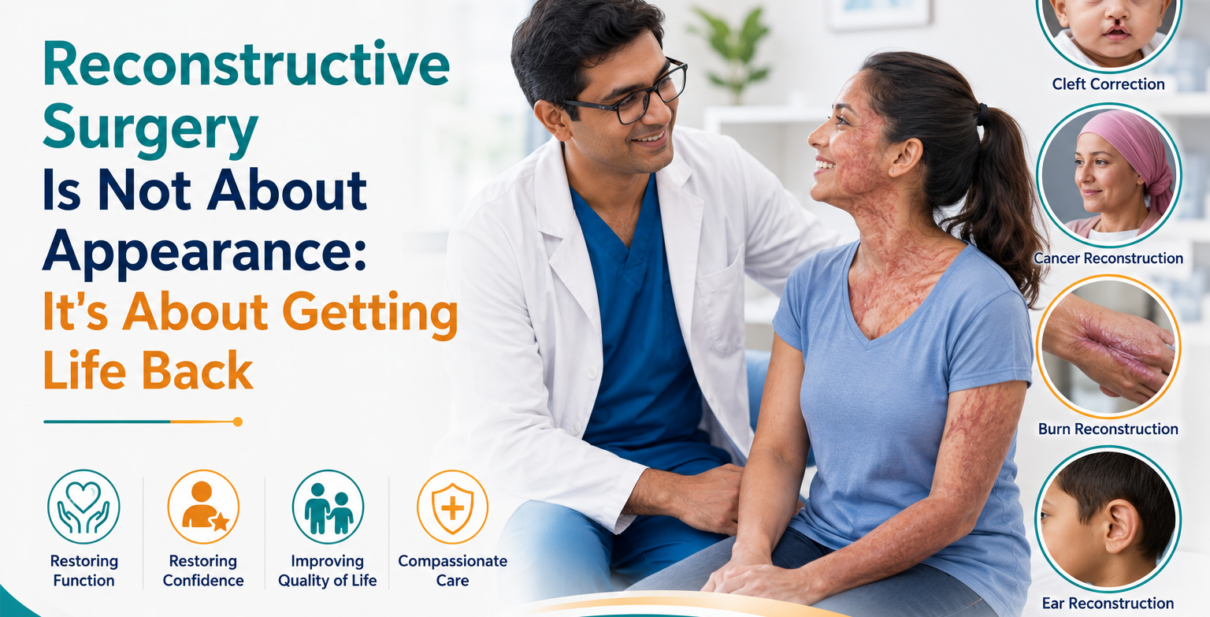
At our AIMS Hospital in Aundh Pune, some of the most rewarding cases we handle are not about changing how someone looks but about helping them recover from life-altering events. Whether it is a child born with a congenital deformity, a cancer survivor undergoing reconstruction, a burn victim rebuilding their life, or a patient recovering from a traumatic injury, reconstructive surgery often serves as a bridge between survival and truly living again.
One of the biggest misconceptions I encounter is that reconstructive surgery is optional. In reality, many patients require these procedures to restore basic functions that most of us take for granted. I have treated individuals who struggled to eat, speak, walk, use their hands, or even smile comfortably because of injuries, birth defects, or medical conditions. For them, reconstructive surgery is not a luxury—it is an essential part of recovery.
Burn injuries are a good example. Every year, patients arrive at our AIMS Hospital in Aundh Pune with burn-related complications that extend far beyond the initial injury. While the wounds may heal, the resulting scars can tighten the skin and restrict movement. Children with severe burns may struggle with normal growth, while adults may find it difficult to perform everyday activities. Reconstructive procedures help release these contractures, improve mobility, and restore both function and appearance.
Cancer reconstruction is another area where plastic surgery plays a vital role. Advances in cancer treatment have improved survival rates significantly, which is wonderful news. However, surviving cancer is only one part of the journey. Many patients face physical changes following surgery, particularly after treatment for breast cancer, head and neck cancers, or skin cancers. Reconstruction allows patients to regain a sense of normalcy and confidence at a time when they need it most.
I often find that the emotional impact of reconstructive surgery is underestimated. Patients may come to us seeking physical improvement, but what they often gain is much more than that. A young adult born with a facial deformity may finally feel comfortable attending social gatherings. A burn survivor may regain the confidence to return to work. A child who once faced teasing because of a congenital condition may finally feel accepted among peers. These transformations cannot be measured solely in surgical outcomes.
At our AIMS Hospital in Aundh Pune, we are also seeing increasing awareness about congenital conditions that can be corrected through reconstructive surgery. Parents today are more proactive in seeking treatment for issues such as cleft lip and palate, hand deformities, and ear abnormalities. Early intervention often leads to better functional and cosmetic outcomes, helping children grow and develop with greater confidence.
Another trend that has emerged in recent years is the advancement of microsurgery. This highly specialized technique allows surgeons to reconnect tiny blood vessels and nerves under magnification. It has revolutionized reconstructive surgery by enabling the transfer of tissue from one part of the body to another. Patients who once had limited options after major trauma or cancer surgery can now benefit from sophisticated reconstructive procedures that were unimaginable a few decades ago.
Despite these advancements, I believe the greatest challenge remains public awareness. Many patients are unaware that reconstructive solutions even exist. They assume they must simply learn to live with scars, deformities, or functional limitations. As surgeons, we spend a significant amount of time educating patients about the possibilities available to them and helping them understand that recovery does not always end when the initial treatment is complete.
One thing I have learned throughout my career is that healing is about much more than closing a wound or repairing a defect. True healing occurs when patients regain their independence, confidence, and ability to participate fully in life again. That is the real purpose of reconstructive surgery.
At our AIMS Hospital in Aundh Pune, we view reconstructive surgery as a partnership between science, skill, and compassion. Every scar tells a story, and every patient brings unique challenges and goals. Our role is not simply to perform a procedure but to help individuals move forward after illness, injury, or adversity.
The next time you hear the term plastic surgery, I encourage you to think beyond appearance. For many patients, reconstructive surgery is not about looking different. It is about reclaiming parts of life that were lost and finding the confidence to move ahead once again.