

As a General Surgeon, one trend has become increasingly difficult to ignore over the past few years. Earlier, gallstones were considered a condition that primarily affected middle-aged individuals. Today, however, I regularly see patients in their twenties and thirties walking into our AIMS Hospital in Aundh Pune with symptoms that eventually lead to a diagnosis of gallstones. What was once considered a problem of later life is now becoming surprisingly common among young adults.
The first reaction from most patients is disbelief. They often tell me that they are too young to have a gallbladder problem. Some are fitness enthusiasts, some are working professionals, and many have no significant medical history. Yet an ultrasound scan reveals gallstones that are responsible for the pain and discomfort they have been experiencing for months.
This naturally raises an important question: why are we seeing more gallstones in younger people today?
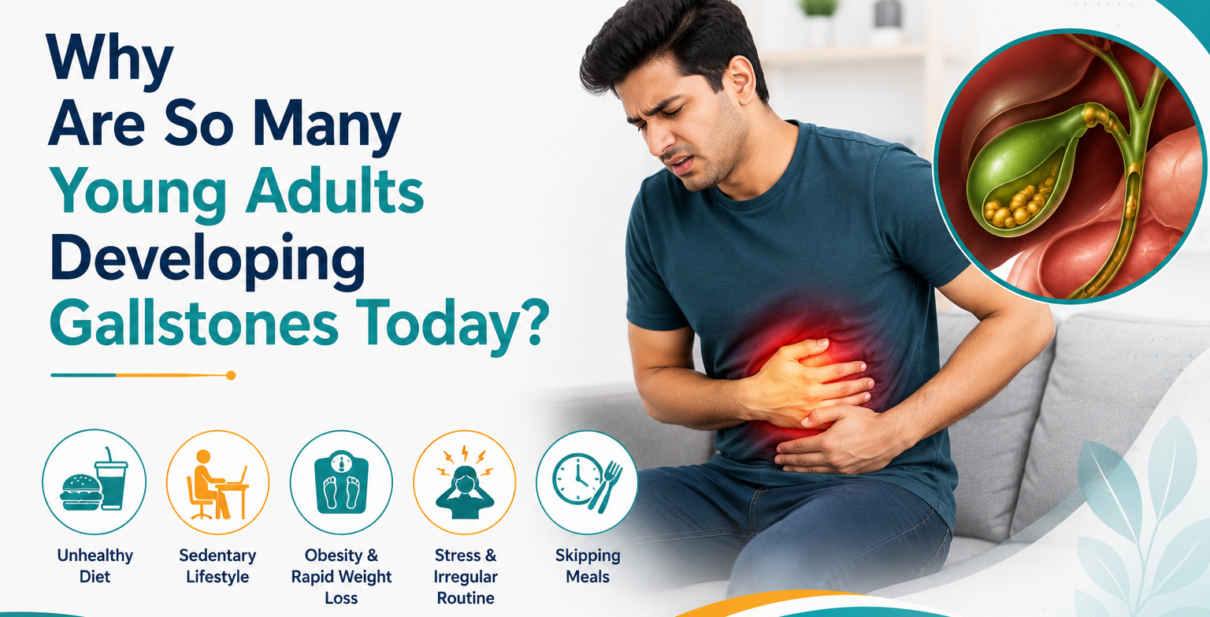
I believe the answer lies largely in the way our lifestyles have changed. Modern life has become increasingly fast-paced. Many young adults skip breakfast, rely on food delivery apps, consume highly processed meals, and spend long hours sitting at desks. Exercise often takes a back seat to work deadlines and personal commitments. While these habits may not seem dangerous on a day-to-day basis, they can gradually affect the digestive system and contribute to gallstone formation.
At our AIMS Hospital in Aundh Pune, one pattern I frequently notice is that many patients ignore their symptoms for a long time. The pain usually begins as mild discomfort after eating a heavy or oily meal. Since the discomfort eventually settles, they assume it is acidity, gas, or indigestion. Over time, however, the episodes become more frequent and more intense. By the time they decide to seek medical attention, gallstones have often been causing problems for months or even years.
The gallbladder is a small organ located beneath the liver. Its primary function is to store bile, a digestive fluid that helps break down fats. When the chemical balance of bile changes, small crystals can form and gradually develop into gallstones. Some people may have gallstones without ever experiencing symptoms, while others develop significant pain and complications.
What many people do not realize is that rapid weight loss can also increase the risk of gallstones. In recent years, crash diets and extreme fitness programs have become increasingly popular. While maintaining a healthy weight is beneficial, losing weight too quickly can sometimes have the opposite effect on gallbladder health. I have seen several young patients at our AIMS Hospital in Aundh Pune who developed gallstones shortly after undergoing dramatic weight-loss transformations.
Stress may also play an indirect role. Although stress does not directly create gallstones, it often influences eating habits, sleep patterns, and overall health. Skipped meals, irregular schedules, and poor dietary choices are common consequences of chronic stress, and these factors can contribute to digestive disorders over time.
One misconception I encounter regularly is the belief that gallstones can always be treated with medication. Patients often hope there is a tablet that can make the stones disappear. Unfortunately, once gallstones begin causing repeated symptoms, medication is usually not a permanent solution. In many cases, surgical removal of the gallbladder becomes the most effective treatment option.
Fortunately, surgery today is very different from what many people imagine. At our AIMS Hospital in Aundh Pune, most gallbladder surgeries are performed laparoscopically. Instead of a large incision, the procedure is carried out through a few small cuts using a camera and specialized instruments. Patients typically experience less pain, recover more quickly, and can return to their daily routines much sooner than with traditional open surgery.
What concerns me more than the surgery itself is the delay in diagnosis. Every surgeon has treated patients who waited until complications developed before seeking help. Gallstones can lead to serious problems such as gallbladder infection, blockage of the bile ducts, jaundice, and even pancreatitis. These complications often require more complex treatment and longer recovery periods. In many cases, they could have been prevented through earlier medical evaluation.
As a General Surgeon, I believe one of the biggest challenges today is helping people understand that recurring abdominal pain is not normal. The body has a way of signaling when something is wrong, but many of us have become accustomed to ignoring those signals. We treat symptoms temporarily rather than investigating their cause.
At our AIMS Hospital in Aundh Pune, we encourage patients to pay attention to persistent digestive symptoms rather than dismissing them. A simple consultation and an ultrasound examination can often provide valuable answers and prevent future complications.
Perhaps the most important lesson is that gallstones are no longer just a disease of old age. They are increasingly becoming a reflection of modern lifestyles. While medical science has given us excellent treatment options, prevention remains far more effective than cure. Healthy eating habits, regular physical activity, proper weight management, and timely health check-ups can significantly reduce the risk.
The next time you experience repeated abdominal pain after meals, don’t automatically blame acidity. Your gallbladder may be trying to tell you something, and listening early could save you from much bigger problems later.