

As a Surgical Oncologist, one of the most common questions patients ask after receiving a cancer diagnosis is, “Doctor, when will the surgery happen?” For many people, cancer treatment and surgery seem inseparable. The assumption is understandable because surgery has been one of the most important tools in cancer treatment for decades. However, modern cancer care is far more complex than many people realize.
At our AIMS Hospital in Aundh Pune, one of the first conversations we have with newly diagnosed cancer patients is about understanding the nature of their disease before deciding on treatment. While surgery remains a cornerstone of cancer management, not every cancer requires immediate surgery, and some may not require surgery at all. The best treatment approach depends on several factors, including the type of cancer, its stage, its location, and the overall health of the patient.
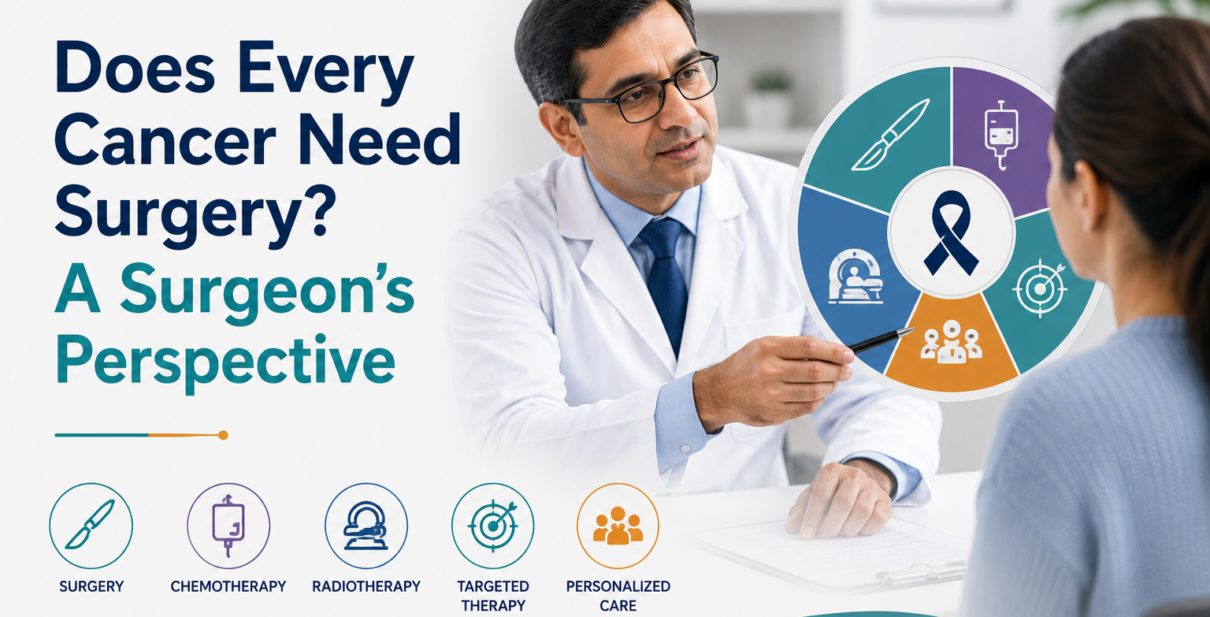
One of the biggest changes in oncology over the last decade is the move toward personalized treatment. Years ago, surgery was often considered the first and most obvious step. Today, advances in medical oncology, radiation therapy, targeted therapy, and immunotherapy have created new possibilities. In some cases, these treatments are used before surgery to shrink tumors and improve outcomes. In others, they may replace surgery altogether.
At our AIMS Hospital in Aundh Pune, we frequently see patients who believe that removing the tumor is always the fastest way to solve the problem. While this may be true for certain cancers, it is not a universal rule. Some tumors respond remarkably well to chemotherapy or radiation therapy, making surgery safer and more effective later. Others may be managed through non-surgical approaches when surgery would not provide additional benefit.
Breast cancer offers a good example of how treatment strategies have evolved. Many patients are surprised to learn that not every breast cancer patient requires extensive surgery. Depending on the stage and characteristics of the tumor, treatment may involve a combination of surgery, systemic therapy, and radiation. The goal is not simply to remove the cancer but to achieve the best possible long-term outcome while preserving quality of life.
The same principle applies to several other cancers. In certain cases of rectal cancer, lymphoma, prostate cancer, and blood-related cancers, surgery may play a limited role or no role at all. This often comes as a surprise to patients who expected surgery to be the primary treatment. Modern oncology focuses on evidence-based decisions rather than one-size-fits-all solutions.
Another misconception I frequently encounter is the fear that surgery itself causes cancer to spread. Despite being a persistent myth, there is no scientific evidence supporting this belief when surgery is performed appropriately. At our AIMS Hospital in Aundh Pune, we spend considerable time educating patients about the purpose of cancer surgery and the safeguards that are taken during treatment. Delaying necessary surgery because of misinformation can sometimes allow the disease to progress.
One encouraging development is that cancer surgery has become significantly more advanced and less invasive than it was in the past. Minimally invasive techniques, laparoscopic procedures, robotic-assisted surgeries, and improved imaging technologies allow surgeons to operate with greater precision. These advances often result in smaller incisions, reduced pain, shorter hospital stays, and faster recovery for patients.
However, successful cancer treatment is rarely the work of a single specialist. At our AIMS Hospital in Aundh Pune, cancer care is increasingly delivered through a multidisciplinary approach. Surgical oncologists work closely with medical oncologists, radiation oncologists, radiologists, pathologists, and other specialists to develop individualized treatment plans. This collaborative model ensures that patients receive the most appropriate treatment for their specific condition.
One of the most important lessons I have learned throughout my career is that cancer treatment is not just about removing a tumor. It is about understanding the biology of the disease, assessing the patient’s overall situation, and selecting the approach that offers the greatest chance of success. Sometimes that approach involves surgery. Sometimes it involves a combination of therapies. Occasionally, it may involve monitoring and observation.
What concerns me most is that many patients delay evaluation because they are afraid of surgery. The fear of an operation often prevents individuals from seeking medical advice when symptoms first appear. Ironically, this delay can sometimes make treatment more complicated than it would have been if the cancer had been detected earlier.
As a Surgical Oncologist, I believe patients deserve clear information and honest guidance. Cancer treatment today is more personalized, more effective, and more sophisticated than ever before. The decision to perform surgery is not based on tradition or routine—it is based on what will provide the best outcome for the patient.
At our AIMS Hospital in Aundh Pune, we encourage patients to ask questions, understand their diagnosis, and actively participate in treatment decisions. A cancer diagnosis can be overwhelming, but knowledge often replaces fear with confidence.
The next time someone asks whether every cancer requires surgery, my answer is simple: not always. What every cancer does require, however, is a carefully planned treatment strategy designed around the unique needs of the individual patient. That is where modern cancer care truly makes a difference.